Access Any Size Aircraft, Anywhere in the World, at a Moment's Notice
Aircraft for Charter
Discover Paramount Business Jets' extensive network of over 4,000 premium private jets available for hire worldwide. With our team's 100+ years of combined aviation experience, we can help you find the perfect jet for your next trip. Our diverse selection ensures a wide range of options and competitive prices, guaranteeing a suitable jet for every discerning client.
Explore the types of aircraft we offer access to and contact us today to learn more.
Find by category
-

Very Light Jets
-
Light Jets
-

Super Light Jets
-

Midsize Jets
-

Super Midsize Jets
-

Large Jets
-

Ultra Long Range Jets
-

VIP Airliners
-
Turboprop Aircraft
Select the best one
Compare aircraftVery Light Jets
- 3 - 6 passengers
- 1125 - 1550 nautical miles
- $2,900 - $3,400 per hour


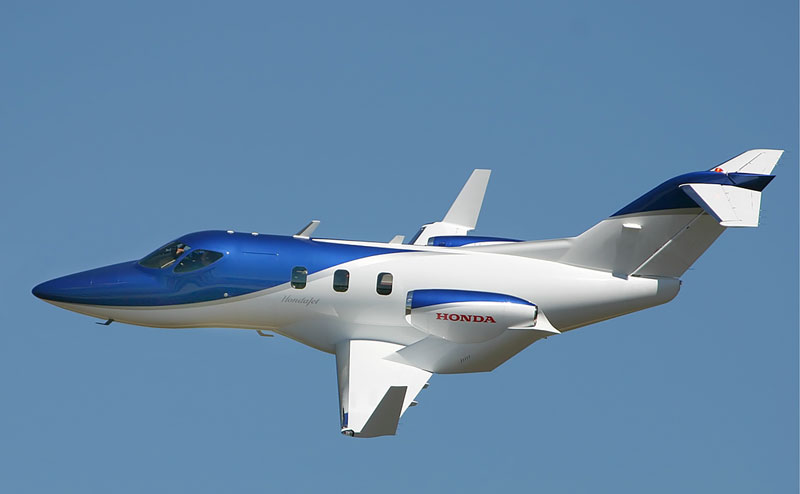
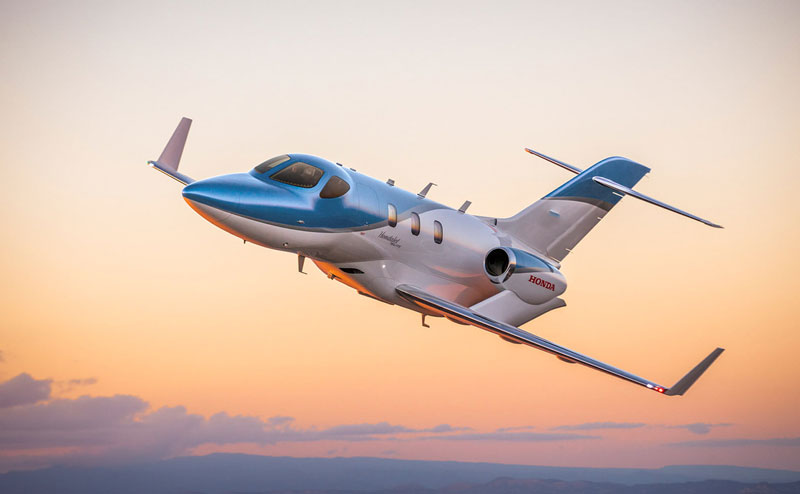


Very light jets (VLJs) are ideal for short-to-medium-range and lightweight trips (under 10,000 pounds) due to their versatility and efficiency. Optimal for small groups of passengers, a VLJ can typically accommodate two to four people. These efficient aircraft combine jet cruising speeds with the ability to operate from smaller airports.
The wide variety of VLJs available encompasses diverse performance characteristics and payloads. While most VLJs are designed for small groups of people, some larger VLJs can accommodate more baggage than others or might include a semi-private lavatory. All very light jets are powered by turbofan engines and feature pressurized passenger cabins for added comfort, safety, and performance. Compared with turboprop aircraft, VLJs offer significant time savings by utilizing jet engines. Very light jets offer similar savings to turboprop jets due to lower operational costs. VLJs are generally configured in a VIP format to cater to executives and maximize passenger capacity.
Light Jets
- 5 - 9 passengers
- 1495 - 2165 nautical miles
- $3,750 - $4,200 per hour


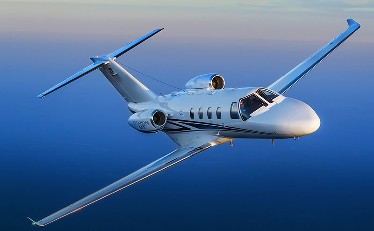
An efficient and economical option for short-to-medium-range flights, light jets offer superior versatility, speed, and range over non-turbine aircraft. Light jets have the added advantage of being able to fly into and out of smaller airports that are inaccessible to major airliners. With cruising speeds averaging 440 mph and a nonstop range of about 1,500 miles, light jets carry you to your destination quickly and efficiently.
For added comfort, performance, and safety, light jet aircraft feature pressurized passenger cabins, and most include a private or semi-private lavatory. Baggage capacity and luggage storage space on light jets may be limited, and often cannot accommodate skis or large golf bags.
Super Light Jets
- 6 - 10 passengers
- 1800 - 2178 nautical miles
- $4,200 - $4,600 per hour


If you’re looking for something more spacious than a light jet, super light jets are a step-up. These aircraft offer more cabin space as well as larger baggage compartments. SLJs are suitable for short-to-medium-range travel and carry between seven and eight passengers. With an increased range from light jets and a bigger cabin space, SLJs are an efficient and economical choice. For a small increase in price, super light jets are capable of landing in smaller airports. These jets are a great way to travel, as they have additional accommodations and an extended range to assure a safe and comfortable trip.
Midsize Jets
- 7 - 9 passengers
- 1858 - 2818 nautical miles
- $4,700 - $5,500 per hour
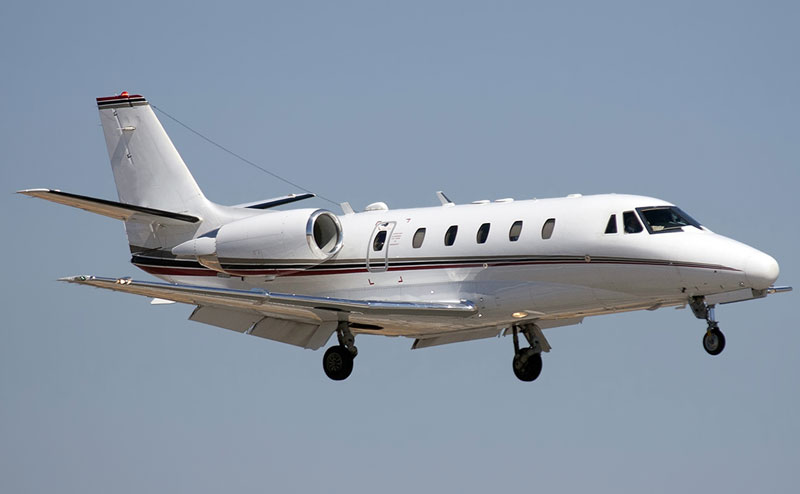


Midsize jets offer the ultimate balance of efficiency, comfort, performance, and economy for medium-length flights. Midsize jets can fly further and faster than their lighter counterparts. These aircraft take advantage of a 500-mph average cruising speed and a maximum nonstop range of around 2,100 miles, all without sacrificing the ability to fly into and out of smaller airports. Simply put, midsize jets offer the best of both worlds.
Most midsize jet aircraft have external baggage storage, which allows them to accommodate a reasonable amount of baggage. However, some only have internal baggage compartments, such as the Hawker line of jets, which limits the capacity and storage space. This may pose problems with skis or other oversized items. All midsize jets also offer a full private lavatory.
Super Midsize Jets
- 7 - 10 passengers
- 2700 - 4018 nautical miles
- $6,200 - $7,500 per hour


Super midsize jets are an attractive middle ground between midsize jets and large jets. These are good for those who require more carrying capacity, speed, and range but don’t need a larger aircraft. Super midsize jets are exceptionally fast, quiet, and efficient, with the comfort of a large jet and the versatility of a midsize jet.
Super midsize aircraft, such as the Falcon 50, offer a wide variety of route options and amenities to private jet passengers. Compared to large jet aircraft, these jets are outfitted with a number of luxurious amenities to add comfort and convenience. They typically seat around 8 to 10 passengers and can offer a longer range than most midsize aircraft. With average cruising speeds that exceed 500 mph, these aircraft are fast, efficient, and normally quieter than smaller, comparable corporate jets. These aircraft have plenty of room for external baggage, oversized items, and more. Every super midsize jet features a fully enclosed lavatory for convenience and privacy.
Large Jets
- 10 - 16 passengers
- 2811 - 5200 nautical miles
- $8,500 - $10,000 per hour


By prioritizing luxury and diverse amenity service for long-haul charter flights, large jets are the epitome of comfort and performance. Large jets travel faster and longer than their smaller counterparts, with average speeds of as high as 530 mph and average ranges of around 4,000 miles. These aircraft are perfect for those who want the premier option for private jet travel.
Large jets are among the most comfortable executive aircraft available and offer optimum performance and luxurious amenities for long-range flights. Although they’re large, they are still compact enough to operate out of airports not accessible by many major airlines. Passengers get to enjoy the high standard of luxury you can find in any large jet. Amenities available on large jets often include a full private lavatory, external baggage compartments, stereo DVD, satellite phone, fax, and a full galley. Additionally, onboard flight attendants will enhance your in-flight experience by providing additional safety and comfort while also assisting with gourmet catering and entertainment.
Ultra Long Range Jets
- 12 - 19 passengers
- 5200 - 7750 nautical miles
- $12,000 - $17,000 per hour


Whether traveling state to state or out of the country, ultra-long-range jets are capable of up to 11 hours of non-stop flight time, much longer than most aircraft. Ultra-long-range jets are ideal for longer trips and can comfortably seat between 12 and 19 passengers. These aircraft are usually configured with first-class seating, offering a luxurious experience for each passenger. Depending on the aircraft model, baggage compartments may hold up to 100 suitcases. Additional features on ultra-long-range jets may include a full bar, catering services, and private rooms.
VIP Airliners
- 18 - 50 passengers
- 4200 - 6000 nautical miles
- $18,000 - $23,000 per hour


The ultimate in convenience, luxury, and comfort, VIP Airliners, such as the Boeing BBJ, offer private jet clients an unparalleled array of choices for in-flight comfort. Being a home in the sky, these super-large aircraft can carry anywhere from 15 to 30 passengers, depending on the interior configuration. All VIP Airliners have ample room for luggage, oversized items, and limited cargo. Compared to most charter airliners, VIP Airliners can operate routes unable to be flown by their smaller counterparts and are frequently used for long-haul and international flights. Due to high operating costs, they are not recommended for short flights. Conveniences such as cabin attendants, sleeper beds, cabins, private suites, and showers are a few of the luxuries these aircraft have to offer.
Turboprop Aircraft
- 4 - 11 passengers
- 1100 - 1974 nautical miles
- $2,300 - $3,500 per hour
-

Piaggio Aero P180 Avanti II
- Pax 9
- Range (nm) 1510
- Speed (KTAS) 401
- Cabin height (ft) 5.74


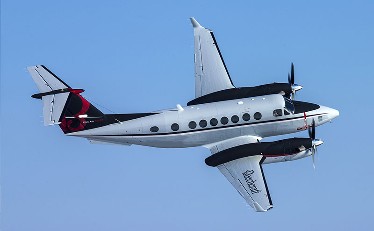
Above and beyond piston aircraft in terms of the average range, speed, and comfort, turboprop aircraft are still just as cost-efficient. By utilizing turbine propeller engines, turboprops operate at speeds averaging 300 mph and have a non-stop range of around 1,000 miles. Turboprops are most popular for short-to-medium-distance flights. These aircraft also have the added advantage of being able to take off and land at virtually any airport.
For added comfort, performance, and safety, most turboprop aircraft have pressurized passenger cabins and often have semi-private lavatories. One downside to turboprops is that their baggage capacity and luggage space are often limited.