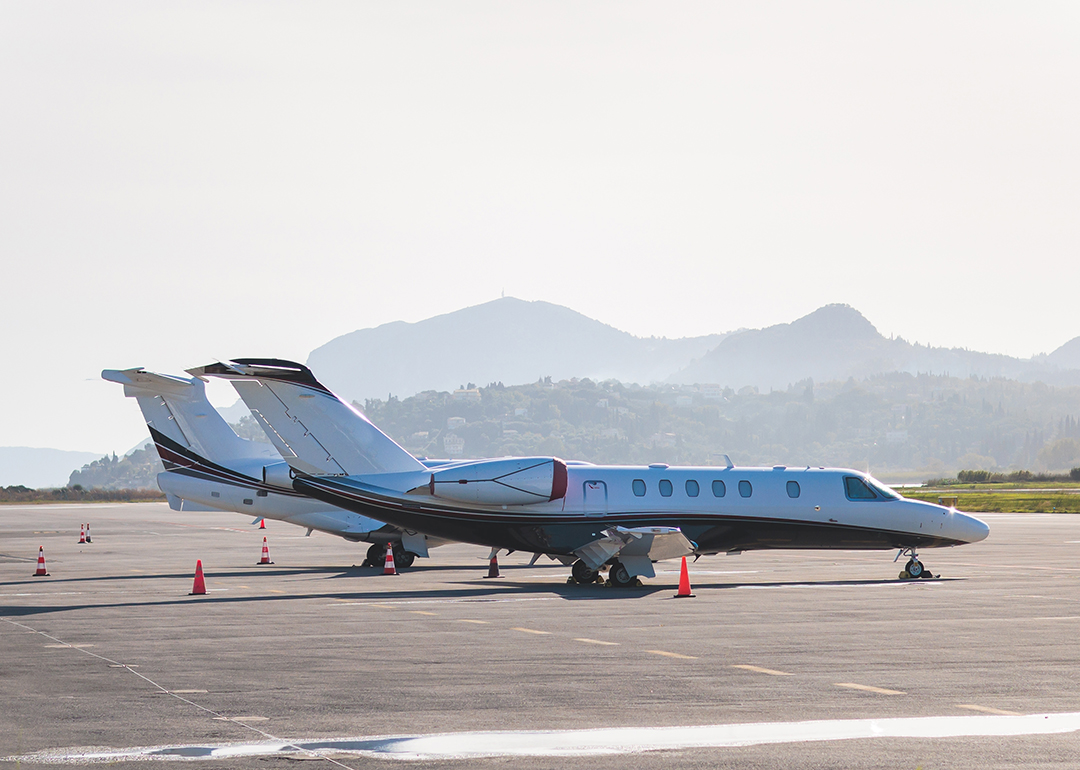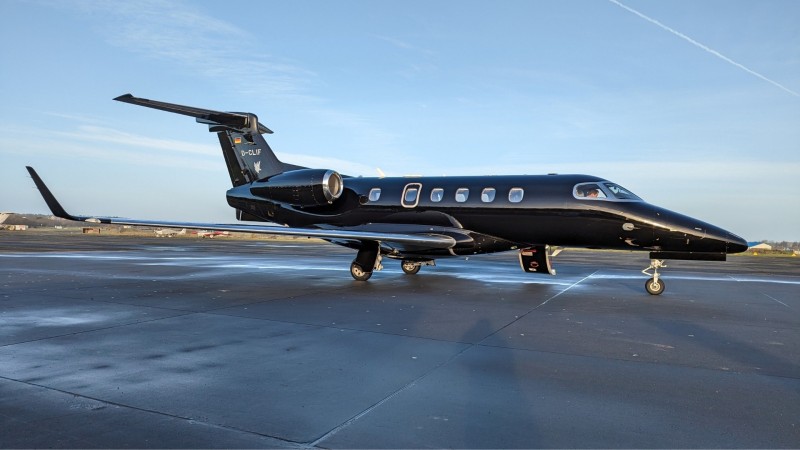


Expect a cruise speed of about 400 to 500 knots from the typical private jet, roughly 460 to 575 mph at altitude. The smallest models sit below that band, with the single-engine Cirrus Vision Jet G3 topping out at 317 knots (about 365 mph), and large Gulfstream and Bombardier jets push just past it, to about 516 knots in high-speed cruise.
Published numbers for the same jet often disagree because manufacturers list up to three speeds for one aircraft, and many websites don't say which one they used. Every figure here keeps the label its manufacturer gives it, so the private jet cruise speed you read for one model means the same thing when you set it against another.
In This Guide, You'll Learn
- Which widely quoted 528-knot figure lines up with a jet's certified limit instead of its cruise setting
- How one light jet outpaces a midsize model by 18 knots, and which two jets they are
- What a 40-knot speed increase saves on four real routes, starting with 12 minutes on the shortest
- Why some websites print a Mach 0.935 jet at 717 mph when the figure at altitude is closer to 617
- The cabin altitude Gulfstream holds while its jets fly at 41,000 feet
- Three questions we ask about your trip before speed enters the decision
Cruise Speed vs. Top Speed on a Jet Spec Sheet
For most of a flight, a jet holds one steady true airspeed in level flight at altitude, and that figure is its cruise speed. Top speed, listed as Mmo (maximum operating Mach), is a certified limit that federal certification rules say may not be deliberately exceeded in climb, cruise or descent. Large-jet makers write both as a Mach number, the jet's speed as a fraction of the local speed of sound.
On the Gulfstream G700 spec sheet, all three published speeds sit side by side:
Spec sheet label | What it tells you | Gulfstream G700 |
Long-range (typical) cruise | The speed behind the headline range figure | Mach 0.85 |
High-speed cruise | The fastest speed the maker quotes a range for | Mach 0.90 |
Mmo | The certified ceiling, never a cruise setting | Mach 0.935 |
The 528 knots often quoted for the Cessna Citation X equals its Mach 0.92 certified limit, while the 516 knots attached to the Bombardier Global 7500 is its Mach 0.90 high-speed cruise. Set side by side, they look like two cruise speeds 12 knots apart, yet the first number matches a limit and the second a setting Bombardier quotes above its Mach 0.85 typical cruise.
Flight-tracking apps add one more source of mixed-up numbers, since they show ground speed rather than airspeed. With a 100-knot tailwind, a jet holding 480 knots through the air crosses the ground at 580, and the same wind on the return leg cuts it to 380. None of that changes the aircraft's cruise setting, but it moves your arrival time far more than the choice between two jets of the same class.
Private Jet Cruise Speeds by Class
Moving up a size class buys more private jet speed, though light and midsize jets overlap almost completely. The Phenom 300E, a light jet, outpaces the midsize Citation Latitude by 18 knots.
Class | Aircraft | Speed cited | Knots | mph | km/h | Max Mach (Mmo) |
Very light (personal) | Cirrus Vision Jet G3 | Max cruise | 317 | 365 | 587 | Not published |
Light | Cessna Citation CJ4 Gen3 | Max cruise | 451 | 519 | 835 | 0.77 |
Light | Embraer Phenom 300E | High-speed cruise | 464 | 534 | 859 | 0.80 |
Midsize | Cessna Citation Latitude | Max cruise | 446 | 513 | 826 | 0.80 |
Super-midsize | Bombardier Challenger 3500 | High-speed cruise | about 470 | about 541 | about 871 | 0.83 |
Super-midsize | Cessna Citation Longitude | Max cruise | 483 | 556 | 895 | 0.84 |
Large cabin | Gulfstream G500 | High-speed cruise | about 516 | about 594 | about 956 | 0.925 |
Ultra-long-range | High-speed cruise | about 516 | about 594 | about 956 | 0.925 | |
Ultra-long-range | Gulfstream G700 | High-speed cruise | about 516 | about 594 | about 956 | 0.935 |
Knot figures without "about" come straight from Textron, Cirrus and Embraer's certification release, all of which publish true airspeed. Gulfstream and Bombardier publish cruise as a Mach number, so we converted those at standard conditions above 36,089 feet, and real-world temperature will move them a few knots either way.
Among super-midsize jets, the Citation Longitude comes closest to large-cabin pace, cruising at 483 knots with a 3,500-nautical-mile range that covers New York to Los Angeles and, on paper, New York to London. Large-cabin jets add about 33 knots and far more range, but on any trip the Longitude can fly nonstop, that extra speed saves under half an hour.
Mach Number Conversion Chart
Above 36,089 feet in a standard atmosphere, Mach 1 equals about 573.6 knots, 660 mph or 1,062 km/h. Warmer or colder air shifts each figure, which is why every row below carries an "about."
Mach | Knots | mph | km/h |
0.70 | about 402 | about 462 | about 744 |
0.75 | about 430 | about 495 | about 797 |
0.78 | about 447 | about 515 | about 829 |
0.80 | about 459 | about 528 | about 850 |
0.85 | about 488 | about 561 | about 903 |
0.90 | about 516 | about 594 | about 956 |
0.925 | about 531 | about 611 | about 983 |
Mach only becomes the number pilots fly by once the jet is high up. Federal rules set the speed limit as an airspeed or a Mach number, whichever is more restrictive at that altitude, and the Citation X type certificate shows the handover, with a cap of 270 knots (calibrated) below 8,000 feet, 350 knots up to 30,650 feet, and Mach 0.92 above that.
Pilots and flight plans work in knots because charts measure distance in nautical miles. One knot is about 1.15 mph, so a jet cruising at 450 knots covers roughly 518 miles every hour.
How Jet Cruising Altitude Affects Speed
Gulfstream and Bombardier publish an initial cruising altitude of 41,000 to 43,000 feet for their large jets, and the G500, G700 and Global 7500 can climb as high as 51,000 feet. Light and midsize Citations have a 45,000-foot maximum operating altitude, while the single-engine Vision Jet stops at 31,000.
Thin air is the main reason crews climb above 40,000 feet before settling in. With less drag to push through, a jet burns less fuel per mile. Climbing also lowers the number of knots behind any given Mach, because sound travels more slowly in cold air, and in the ICAO standard atmosphere Mach 1 drops from about 602 knots at 25,000 feet to about 574 knots above 36,089 feet.
A fully fueled jet on a long leg may not reach its best altitude right after takeoff, so crews often climb in steps as fuel burns off and the aircraft gets lighter.
How Fast Are Private Jets Compared With Commercial Airliners?
Narrowbody airliners such as the Airbus A320neo cruise near Mach 0.78, and widebodies like the Boeing 787 run closer to Mach 0.85. At cruising altitude, that works out to about 447 to 488 knots, so the commonly quoted airliner band of 450 to 480 knots (515 to 550 mph, or 830 to 890 km/h) covers most of it. Our guide to aircraft speeds compares business jet top speeds model by model.
Set against that band, a light or midsize private jet cruises at about the pace of a narrowbody airliner, and a Gulfstream or Global in high-speed cruise outruns a widebody. Door to door, the bigger difference usually comes from the ground. A charter leaves when you schedule it, from the FBO you pick, and sometimes from an airport closer to your final stop, so the time you skip at a terminal can outweigh anything 30 extra knots buy you in the air.
Does a Higher Cruise Speed Reduce Flight Time?
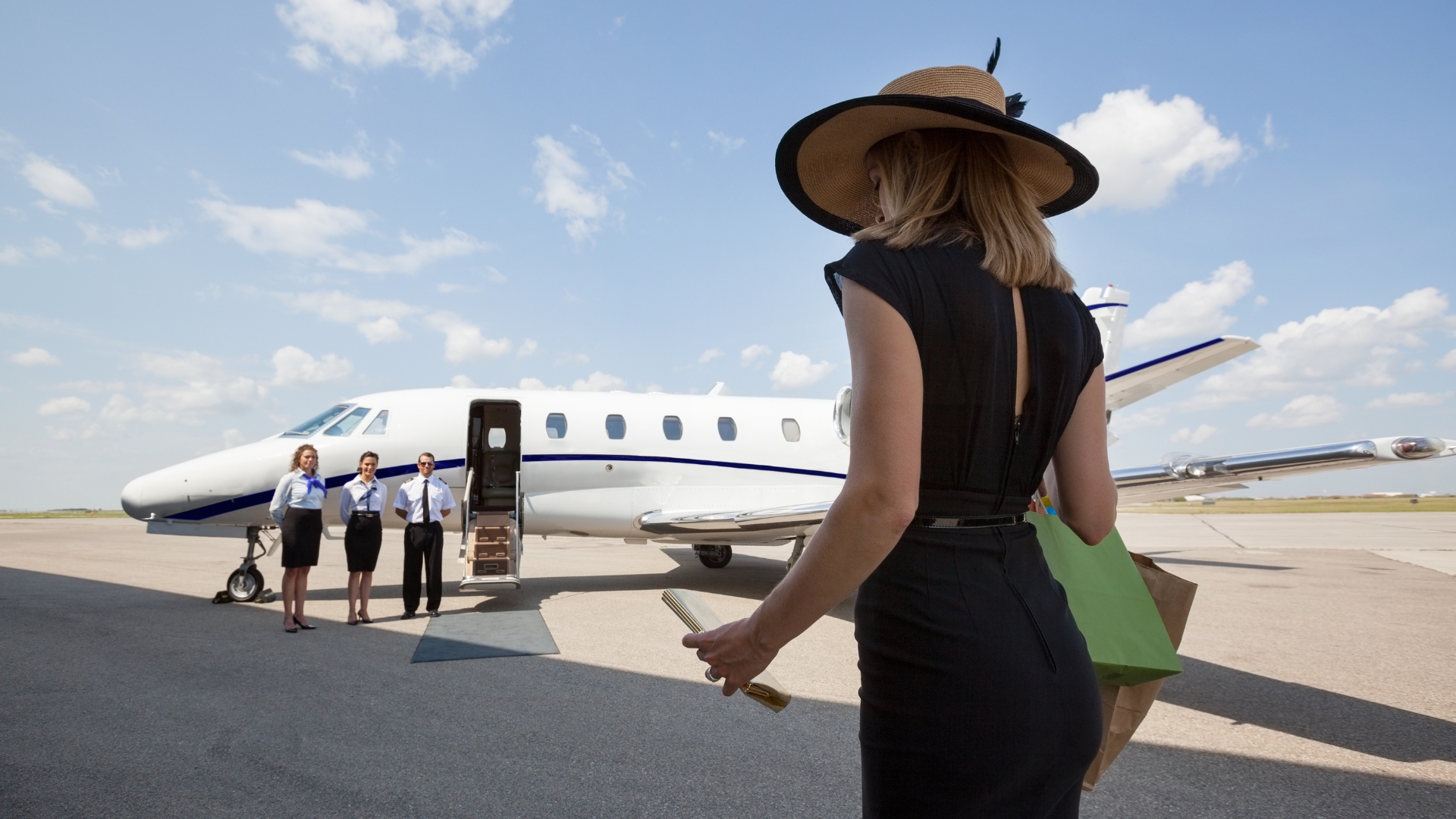
Raising cruise speed from 420 to 460 knots, a jump of about 10 percent, saves around 12 minutes between New York and Miami and 37 minutes between London and Dubai. Moving from Mach 0.85 to Mach 0.90 saves less, about 20 minutes on either the transatlantic or the Gulf leg.
Route | Distance (nm) | 420 kn | 460 kn | Mach 0.85 (about 488 kn) | Mach 0.90 (about 516 kn) | Saved, 420 to 460 kn |
Teterboro to Opa-locka (Miami) | 949 | 2h 16m | 2h 04m | 1h 57m | 1h 50m | 12 min |
Teterboro to Van Nuys (Los Angeles) | 2,129 | 5h 04m | 4h 38m | 4h 22m | 4h 07m | 26 min |
Teterboro to Luton (London) | 2,989 | 7h 07m | 6h 30m | 6h 08m | 5h 47m | 37 min |
London Heathrow to Dubai | 2,968 | 7h 04m | 6h 27m | 6h 05m | 5h 45m | 37 min |
Cruise phase only, great-circle distance, calm air. Taxi, climb, descent, and winds are excluded, and a jet stream headwind or tailwind can move any of these times by more than the speed difference does.
Short trips shrink the payoff further, since climb and descent take up a larger share of the flight. Below 10,000 feet in the US, federal rules cap airspeed at 250 knots unless the FAA authorizes otherwise, so every jet spends the first and last part of its trip under the same 250-knot ceiling, however fast it cruises.
Range matters more than speed on the two longer legs. The Citation CJ4 Gen3 flies up to 2,165 nautical miles, so it can't make either the transatlantic or the Gulf route nonstop, and the useful comparison there is which jets can fly the route without landing for fuel.
Choosing a Jet for Your Route, Passengers and Payload
The fastest jet on the list arrives first only when it can fly your trip nonstop with the people and bags you're bringing. When we match a jet to a trip, cruise speed comes after three questions that decide the schedule first.
- How far are you going, and where are you landing? A jet that flies the whole leg nonstop beats a faster one that stops for fuel. Runways narrow the list too, since Textron rates the CJ4 Gen3 for a 3,410-foot takeoff field length while Gulfstream lists 5,995 feet for the G700 at maximum weight.
- Passengers and bags compete with fuel for the same weight allowance. Textron lists a 3,200-pound maximum payload for the Citation Longitude but only 1,600 pounds with full tanks, so a full cabin on a long leg can force a fuel stop that wipes out any speed advantage.
- Is the trip near the edge of the jet's range? Faster cruise burns more fuel per mile. Gulfstream rates the G700 for 7,750 nautical miles at Mach 0.85 and 6,650 at Mach 0.90, so any trip longer than about 6,650 nautical miles has to be flown at the slower setting to stay nonstop.
Tell us the route, the number of people, and what they're bringing, and our charter team will show you which aircraft gets you there soonest once range, payload, and fuel stops are counted. Request a charter quote or call +1-877-727-2538 ext. 1.
FAQ
What is the average cruise speed of a private jet?
Light, midsize and super-midsize jets cruise at about 400 to 500 knots, large-cabin jets reach about 516 in high-speed cruise, and the single-engine Cirrus Vision Jet manages 317. Any average depends on which spec label goes into it, because a large jet's long-range cruise sits about 28 knots below its high-speed cruise.
How fast do private jets fly in mph?
At altitude, the typical private jet covers about 460 to 575 mph, and large-cabin jets reach about 594 mph at Mach 0.90. Figures above 700 mph, such as the 717 mph often printed for the Citation X+, come from converting a Mach 0.935 top speed with sea-level air, while in the cold air above 36,089 feet that Mach number equals about 617 mph.
What is the difference between cruise speed and top speed?
A jet holds its cruise speed for hours, while Mmo is a ceiling the crew stays below. Certification rules require Mmo to sit far enough under the dive speed proven in flight testing that an accidental overspeed into that range is highly improbable, so the gap on a spec sheet is a built-in safety margin.
At what altitude do private jets cruise?
Large Gulfstream and Bombardier jets begin cruise at 41,000 to 43,000 feet and can climb to 51,000, while light and midsize jets top out around 45,000. Passengers breathe much lower air than that, since Gulfstream holds the G700 cabin at 2,840 feet and the G500 cabin at 3,255 feet while the jet flies at 41,000 feet.
Are private jets faster than commercial airliners?
Large-cabin private jets in high-speed cruise outrun a Boeing 787, while a midsize jet falls behind one. On a New York to Los Angeles leg, a Citation Latitude at 446 knots spends about 4 hours 46 minutes in cruise, roughly 24 minutes longer than a 787 at Mach 0.85, and a G700 at Mach 0.90 finishes about 15 minutes sooner than the 787.
Which private jets have the highest cruise speeds?
The Bombardier Global 8000 leads with an ultra-high-speed cruise of Mach 0.92 and a certified top speed of Mach 0.95, which makes it the fastest private jet in service. The Gulfstream G700 and G800 follow at a Mach 0.90 high-speed cruise. Our look at the fastest corporate jet covers the Global 8000 in detail.