

Private Jet Charter for Major Sporting Events: Slots, Ramp Space, and FBO Event Fees
Book now or you won't fly. That was the message running through private aviation for the six months before the 2026 World Cup, and we ran a version of it ourselves in June.
Parts of it held up. Rates rose, ramp space tightened, and clients who left arrangements until the last week paid for both. But the demand picture underneath the urgency was built on a figure that was never a forecast, and the difference matters for every event you plan from here.
At a major sporting event, the constraint is rarely the aircraft. It's the ground: where you can park, what the handler charges, whether your crew can find a bed, and how long the last three miles take.
The 12.9x World Cup Surge Figure Came From Fuel Uplift Data
WingX studied business jet fuel uplift at host airports across the three previous World Cups and found a repeating pattern. Group stages ran around 1.5 times normal. Quarterfinals, 1.9 times. Semifinals jumped to 5.2 times, and the final reached an average of 12.9 times the standard level at the relevant host airport.
By spring that last number was circulating as a prediction for 2026. It described a historical average of fuel uplift at one airport on one day.
The figures quoted around the tournament measure different things:
| Figure | What it measures | Scope |
|---|---|---|
12.9x at the final | Fuel uplift against a normal day | One host airport, final day, averaged across three previous tournaments |
38% | Increase in flight numbers | New York metro airports, final weekend 2026 |
17% | Increase in flight numbers | Host cities, 2026, though the comparison base varies by source |
2,467 movements per day (7% up) | Daily movements against a pre-tournament baseline | All 16 host cities, 11 to 27 June only, stopping before the sharpest rounds |
The 17% needs unpacking. WingX, whose weekly activity tracking produced it, described the figure as the surge the overall tournament drew.
Coverage of the same release defined it as departures around knockout games measured against other days. Elsewhere it appeared as a year-on-year increase across all stages. One number, three comparison bases. Picking the most flattering one would be easy, and we're not going to.
None of this makes the historical pattern wrong. Fuel uplift at a stadium's nearest airport on final day and flight counts across a whole metro over a weekend are separate measurements, and no arithmetic connects them. The marketing lived in the gap between the two.
Where the tournament did push private jet traffic sharply higher was away from the obvious places. Seattle ran about 130% above normal around the Belgium match that knocked out the USA, Kansas City about 114% for Argentina against Switzerland, and Mexico City about 112% year on year when England eliminated Mexico. Large hubs absorbed their share with less strain than the smaller fields did. Secondary markets are where capacity gets tight, and they're the ones nobody warns you about.
Price moved harder than volume. Brokers reported charter rates between US cities up roughly 30% during the tournament, driven by repositioning, thin availability, and event-related operating fees.
Our June guidance advised booking three to four months out, on the strength of the pre-tournament demand picture. For that tournament it was more caution than the event required, and we'd rather say so than leave it standing.
Whichever version you prefer, it won't change what you should be pricing. Surge percentages describe a market. Your costs come from one airport, on your dates, under one handler's fee schedule.
Why Ramp Space Runs Out Before Runway Capacity
Runways clear. Ramps don't.
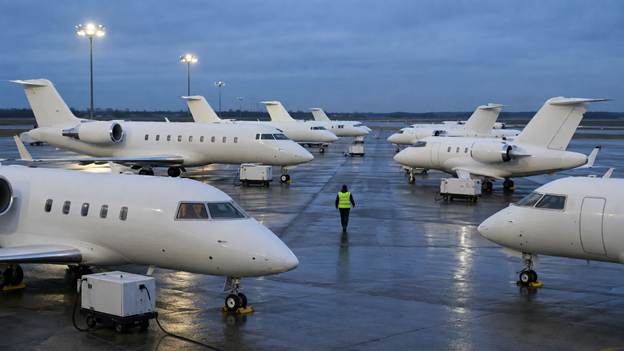
Movements cycle through an airport all day long. A parked aircraft holds its space until it leaves, and at a major event most aircraft stay two or three nights. So the refusal you get during event week is usually about parking, not about a landing slot. So the question to put to your operator is where the aircraft sits for three nights.
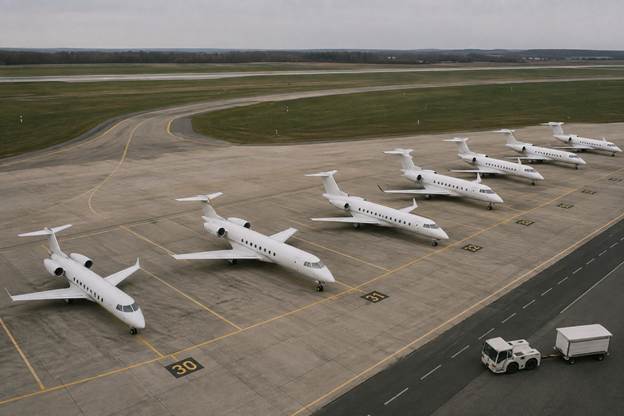
Some fields impose drop-and-go on peak days, so your aircraft unloads and repositions to wait somewhere else, adding a ferry leg that may not appear in your original quote. Others close overnight parking entirely once the ramp fills. Weight rules bring a third problem, constraining what you can carry instead of banning your aircraft outright.
At Teterboro, the cap is 100,000 pounds of actual gross weight, counting passengers, cargo, fuel and equipment. The certified maximum on the type certificate doesn't govern. An aircraft certified above the cap can still use the field by restricting its weight for each movement and filing a certification form with weight and balance for both the arrival and the departure.
So a Gulfstream G650 can fly into Teterboro. Whether it can land there and then depart transatlantic with full fuel is a different question, and your operator needs to answer it while the airport is still an open choice.
FBO Event Fees: What They Cover and What to Ask Before You Sign
An FBO event fee is a temporary surcharge the ground handler adds during a high-traffic window, covering the extra ramp staff, security, equipment and crew housing brought in for the event. Your operator doesn't set it and your broker doesn't collect it. Because it attaches to the window, private jets with no connection to the event pay it too.
We've written separately on how special event fees get calculated and billed. At the point of booking, a different set of questions matters.
Fees are no longer uniform across a single airport. One handler on the field charges a peak fee while the handler beside it, with ramp to spare, charges less or nothing, a pattern brokers have described as growing competition between FBOs on the same field. Ahead of the World Cup, Clay Lacy said it would not charge event fees at Van Nuys during the tournament.
So an event fee isn't a fixed cost of the destination. It's also why clients get reassigned between handlers at short notice, on availability and price. A quote reading "subject to FBO charges" gives you nothing to hold anyone to.
Five things to require before you sign:
- The fee as a figure, not as a category.
- Which FBO you're assigned to, in writing, and what happens to your pricing if you're moved.
- Whether the fee window extends beyond match day. Some handlers apply these across a whole event period, so arriving four days early can still attract one.
- Parking terms for your full stay, plus the reposition cost if the field won't take you overnight.
- Crew accommodation, and who carries the cost if it can't be arranged locally.
At publicly funded airports you have more standing than most travelers use. AOPA has pushed for years on itemisation and reasonableness of FBO charges, and asking for a written breakdown of what a five-figure fee covers is a routine request.
How to Choose an Airport for a Major Sporting Event
Three questions decide which field works: whether it can park your aircraft for the length of your stay, what the handler charges inside the event window, and whether the aircraft you want can operate there at the weight you need it to carry.
Four situations cover most events:
| Situation | What the nearest field gives you | What it costs | When to move out |
|---|---|---|---|
Dense metro, one dominant reliever | Shortest distance to the venue | Highest fees, tightest parking, weight limits or Prior Permission Required (PPR) | Almost always worth pricing an alternative |
Metro with several relievers | Genuine choice of handler and price | Fees vary field to field, so quotes diverge | When the closest field quotes a fee the others don't |
Secondary market, single field | Simple logistics, few competing arrivals | Capacity fills fast and there's no fallback nearby | Book early or plan the reposition from the start |
International arrival | Customs on site, one stop | Slot and manifest timing drive the whole schedule | Rarely, since customs availability outranks distance |
Moving your arrival twenty or thirty miles out can remove the event fee altogether. What that saves scales with the aircraft: a few thousand dollars on a light jet, considerably more for a large-cabin type at a field under pressure. The drive costs you time, though on a day when roads around the venue are shut anyway, that penalty is smaller than it looks on a map.
Runway length, ramp capacity and customs availability vary more between fields serving the same city than most people expect, so look up which airports serve a given metro before you settle on one.
Crew Hotels Can Force Your Aircraft to Leave Without You
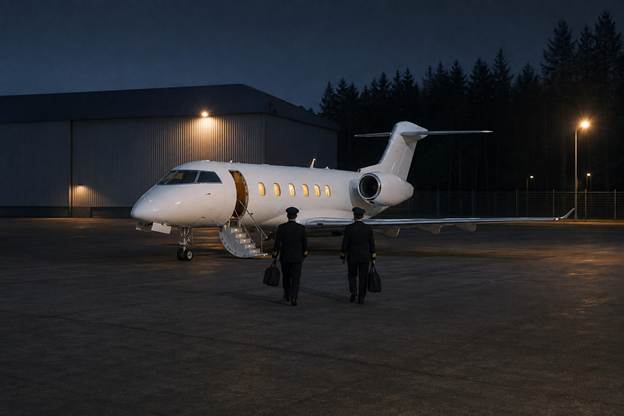
Crew rest has to be a continuous block free of all duty, and Part 135 sets the minimum at 10 consecutive hours before the next duty period starts.
Travel to lodging comes out of that block instead of adding to it. A hotel an hour away turns a 10-hour requirement into roughly 12 hours of unavailability, and during event week the rooms left over are the far ones. Where nothing works, the aircraft repositions to a city where the crew can sleep and returns for you, and that ferry flight lands on your invoice.
Duty caps compound it. The same rule holds a duty period to 14 hours, so a crew that reached you on a long leg may not be legal to depart after a late finish, whatever your schedule says. Ask when your crew's duty day starts and ends before you plan a post-match exit.
Flying Private Doesn't Fix the Last Three Miles
You'll exit the FBO into the same traffic as everyone else.
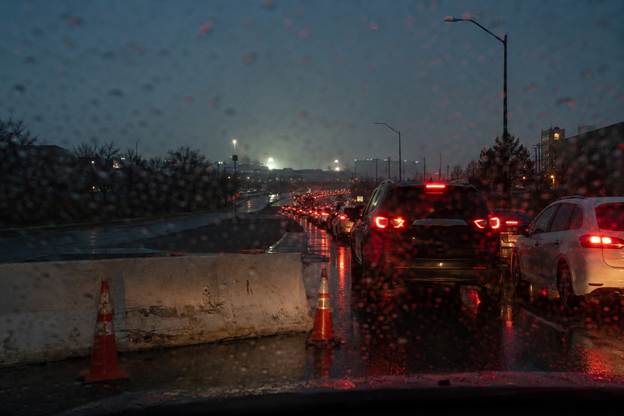
Airspace restrictions vary more than most travelers expect. The FAA's standing sporting-event NOTAM closes three nautical miles around the venue up to 3,000 feet, from an hour before the scheduled start until an hour after the finish. Coverage runs to baseball, NFL and NCAA Division I football, and major motor racing. Soccer, golf and everything else depend on whether the FAA issues something purpose-built for that event.
For the biggest fixtures it does, on a much wider footprint. Super Bowl airspace has run to a multi-day inner core with a broad game-day ring beyond it, and the dimensions publish close to the date. Either way, the helicopter shortcut you were counting on may not exist, and road closures around the venue apply to everyone.
One broker's warning to first-time charter clients was blunt: "World Cup is not the place you want to charter for the first time." We'd say something similar to anyone whose main reason for flying private is saving time. Event week is where private aviation delivers the least of it.
Schedule control is a different proposition. If you're moving a group, following a team whose next city isn't decided, or need to be somewhere the morning after, that's exactly what charter is for and commercial can't match it. Be clear which of the two you're buying.
What a Private Jet Charter Costs During Event Week
The same routing costs more during an event, and the increase breaks into parts you can itemise.
Four things move it:
Repositioning. The aircraft has to reach you and leave again through congested airspace.
The event fee at whichever handler you're assigned to
Extended parking, or a ferry leg if the field won't keep the aircraft overnight
Crew cost. Housing runs at event-week rates, and long days sometimes mean a second crew.
Ask for two quotes on the same routing: one for your dates, one for an ordinary weekend. The difference is what the event is charging you, itemised, and it gives you something concrete to decide against. Running your route through our charter cost estimator gives you a baseline to hold both quotes up to.
Book the Airport Before You Book the Aircraft
For event travel, fix the airport first and the aircraft second. Most guides invert that, but the airport determines which aircraft can operate and what the ground will cost. Which is also why blanket advice to book everything months ahead overshoots: the airport decision wants early attention, the aircraft usually doesn't.
- Three months out. Choose the field. Confirm parking for your full stay, PPR requirements, and whether overnight parking is permitted on peak days.
- Six to eight weeks out. Select the aircraft and operator against the constraints the airport has already set.
- Two to three weeks out. Get the event fee named as a figure, the FBO confirmed in writing, and crew accommodation locked.
- Final week. Ground transport, and a departure window with room in it for crowd clearance.
Knockout brackets break this timeline on purpose. When you don't know which city you'll need next, the answer is a standing arrangement with a broker who can source an aircraft locally in the new region instead of ferrying yours across the country.
The Next Major Sporting Events Worth Planning Around
Super Bowl LXI, SoFi Stadium, 14 February 2027. The single highest-pressure weekend in US business aviation, and the one fixture where the airspace footprint expands well beyond the standing rule.
FIFA Women's World Cup, Brazil, 24 June to 25 July 2027. Eight host cities, spread across a country larger than the continental US.
Ryder Cup at Adare Manor, County Limerick, 17 to 19 September 2027. A small field with a European handling market around it.
LA28 Olympic Games work the same catchment as the Super Bowl, sustained across more than two weeks.
Two of those sit outside the FAA's reach. Brazil and Ireland set their own slot, handling and crew rules, so the regulatory detail doesn't cross the border. The sequence does: pick the field, price the ground, then choose the aircraft.
SoFi is the one to watch. It took World Cup group matches in June and a quarterfinal on 10 July, hosts the Super Bowl in February, and carries the Olympics after that. Three events, three years, one airport network across Van Nuys, Hawthorne, Burbank and Long Beach. How that network handled World Cup load is the best available guide to how it handles the next two.
Planning travel to an upcoming event? Request a quote with the event fees itemised, or call us on +1-877-727-2538. We'll price the airport options side by side, at no cost and no obligation, before you commit to one.
Frequently Asked Questions
Do I need a slot or PPR to fly private to a major sporting event?
Often, yes. Busy fields move to Prior Permission Required status during event windows, and some require a named arrival slot on top. A few run PPR year round, so it isn't only an event-week problem. Your operator files these, but confirm they're held before you finalise anything else.
Do FBO event fees apply if I'm not attending the event?
Usually. Handlers apply these to the traffic window regardless of why you're flying, so an aircraft arriving on unrelated business during event week can attract the same surcharge. Check with the assigned FBO for your dates before you assume you're exempt.
What does drop-and-go mean?
The field lets your aircraft land and unload but won't park it overnight. It departs empty to another airport, waits there, and returns to collect you. You pay for both ferry legs, so ask whether they're in the quote.
How far ahead should I book a private jet for an event?
Decide the airport three months out and the aircraft six to eight weeks out. Booking later is possible and often fine, but your choice of field narrows first, and that's the decision with the most cost attached to it.
How much more does a private jet charter cost during a major event?
Enough that it's worth pricing separately. The premium comes from repositioning, the handler's event fee, extended parking and crew cost, so it isn't one surcharge you can look up. Ask for the same routing quoted on an ordinary weekend and compare the two.
Should I charter for the first time at a major event?
Probably not. Event week brings the highest fees, the tightest ground logistics and the least schedule flexibility of any weekend in the year. If you want to find out what chartering is like, an ordinary trip will show you more of the upside.