Passengers, too, are recalibrating their experiences. High-net-worth travelers no longer view safety as a baseline assumption. They want transparency, redundancy, and technological advance protection that mirrors or exceeds what is found in commercial aviation. Paramount Business Jets has examined this shift and notes it comes amid converging regulatory pressure from the Federal Aviation Administration, European Union Aviation Safety Agency, and International Civil Aviation Organization, all of which have published forward-looking frameworks pointing towards higher safety standards by 2030.
The result is a technological inflection point. By the end of the decade, many features that are currently optional are poised to become industry norms. This story explores the technologies shaping this transition, the regulatory forces accelerating adoption, and what private aviation is set to look like in the near future.
The regulatory imperative: Why 2030 marks a safety inflection point
Regulators are rarely subtle when change is on the horizon. Over the past several years, aviation authorities around the world have published strategic plans that collectively point toward a more automated and data-centric safety ecosystem. In the United States in particular, the FAA’s Next Generation Air Transportation System (NextGen) has moved beyond conceptual modernization and into final-stage implementation.
Based on the FAA’s Destination 2025 Strategic Plan, which outlines future plans for the agency, NextGen’s goals include performance-based navigation, digital information sharing, and real-time system awareness. These are capabilities that can influence private aviation safety outcomes. Similarly, the NextGen Capstone Memorandum published by the Department of Transportation positions the late 2020s as the point at which voluntary equipage likely will give way to standardized expectations.
Across the Atlantic, the EASA is also pursuing a parallel path, but in some ways more ambitiously. Rather than focusing solely on aircraft hardware, the EASA framework instead integrates human factors, automation, and data analytics into a unified safety model. This philosophy is echoed in the U.K. National Aviation Safety Roadmap, which aligns closely with EASA principles and highlights hazard identification and digital resilience as core objectives.
For private aviation in particular, EASA’s approach signals a future in which safety performance is continually monitored, not just audited after incidents occur.
At the global level, however, the International Civil Aviation Organization (ICAO) has set perhaps the most ambitious benchmark of all: a long-term objective of zero fatalities. The ICAO Global Aviation Safety Plan details a framework centered on predictive risk management, standardized data sharing, and technology-assisted prevention. While ICAO doesn’t directly regulate private operators, their standards undoubtedly shape national regulations around the world. By 2030, ICAO-aligned safety expectations are likely to influence everything from avionics requirements to operator safety management systems.
Predictive analytics: The crystal ball of flight safety
If one technology in particular is set to define the next decade of aviation safety, it is predictive analytics. Rather than reacting to incidents, modern safety systems are aiming to anticipate them. Aircraft health monitoring has evolved from periodic maintenance checks to continuous, real-time diagnostics. Manufacturers now equip aircraft with systems capable of tracking engine performance, structural stress, avionics behavior, and environmental conditions during every flight.
Certain existing programs, such as Bombardier’s Smart Link Plus program, exemplify this shift. This program uses real-time data to identify anomalies before they become a safety issue. Similarly, Gulfstream has invested in data-driven safety oversight through its customer support infrastructure, emphasizing predictive maintenance and operational trend analysis.
By 2030, these systems are expected to move from optional support tools to standard safety features. Predictive analysis also extends beyond the aircraft itself. Modern flight risk assessment tools can now integrate weather modeling, airspace congestion data, pilot fatigue indicators, and historical incident trends to generate a more dynamic risk profile. This profile can adjust continuously, rather than relying on pre-flight checklists alone.
Automation and autonomous systems: The pilot's new co-pilot
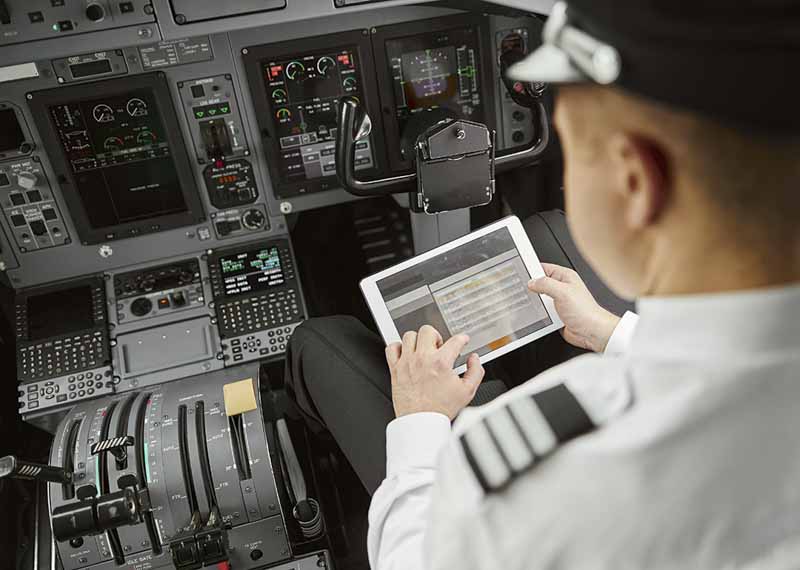
Automation has long been a feature of aviation, but its role is set to expand rapidly. Next-generation flight decks are designed to reduce cognitive load and improve situational awareness. Automation can now assist with energy management, terrain avoidance, and complex approach procedures, functions that were once entirely reliant on pilot judgment.
EASA’s innovation framework for emerging technologies outlines a gradual pathway toward higher levels of automation. This pathway emphasizes safety augmentation as opposed to replacing pilots. By 2030, advanced automation is expected to be deeply integrated into private aircraft operations.
While fully autonomous private aircraft remain unlikely by the end of the decade, regulators are actively studying reduced-crew concepts to make flying more efficient. Enhanced automation, combined with predictive monitoring, may allow certain operations to safely function with fewer onboard personnel under specific conditions. This transition will be cautious and incremental, but it’s clearly underway.
Advancements in biometric access and cybersecurity
As aircraft continue to become more connected, safety is set to increasingly overlap with cybersecurity in two overarching ways:
Multi-factor biometric authentication: Biometric access systems using fingerprints, facial recognition, or iris scans are emerging as a solution to both security and safety concerns, as evidenced by Honeywell’s recent partnership with Gulfstream to integrate digital identity verification.
Cybersecurity as a core safety function: Beyond multi-factor authentication, the FAA has increasingly framed cybersecurity as a safety issue rather than an IT concern, meaning robust protections are expected to be non-negotiable in the future of private aviation.
Advanced avionics: The eyes and ears of tomorrow
Avionics remain at the heart of aviation safety evolution, and technologies like synthetic vision systems (SVS) and enhanced vision systems (EVS) are rapidly developing. These technologies can help provide pilots with clear, digitally reconstructed views of terrain, runways, and obstacles, even in poor visibility. This can significantly reduce the risk of controlled flight into terrain and approach-related incidents in particular.
By the end of the decade, regulators are expected to treat these systems as essential rather than optional. Going further, advanced surveillance technologies can enable precision aircraft tracking, improved traffic awareness, and enhanced collision avoidance. These systems align closely with NextGen and ICAO objectives for global airspace safety, meaning they will likely be a major part of the future of private aviation.
Manufacturer technology roadmaps: The race to safety
Manufacturers aren’t just sitting on their hands waiting for mandates. They are actively shaping the future. Gulfstream, in particular, has been a leading force of this change with its G700 and G800 platforms showcasing how manufacturers are embedding safety into every layer of design. Everything from avionics redundancy to predictive maintenance is being innovated on Gulfstream jets, and the company’s continued investment in customer support infrastructure further reinforces its commitment to long-term operational safety.
Additionally, Bombardier’s Global 8000, now in service, demonstrates how speed, range, and safety can all coexist through advanced systems integration. This plane aligns with their broader 2025-2030 published growth initiatives, emphasizing innovation as their competitive and safety differentiator amongst other brands.
From today's options to tomorrow's mandates
Innovation in the aviation industry often takes years, given the regulatory hurdles to be overcome. As a result, the path from today to tomorrow’s mandates can be broken down into two distinct multi-year periods:
1. 2025-2027: The foundation phase
This period of time will focus primarily on the development of infrastructure readiness, voluntary adoption, and regulatory alignment. Operators who equip earlier will gain experience and grow more accustomed to the new standards, while also potentially influencing future standards.
2. 2028-2030: The standardization phase
By the late 2020s, many of these technologies are expected to transition from optional to expected. The implementation timeline in the NextGen Capstone Memorandum covers how this convergence will be slow, yet manufacturer after manufacturer will begin to implement the technology.
The passenger experience: Safety as the new luxury
For decades, the private aviation experience has been defined by speed, comfort, and exclusivity. Larger cabins, quieter flights, bespoke interiors, and seamless ground handling were the benchmarks by which aircraft and operators differentiated themselves. By 2030, however, those features will increasingly be viewed as table stakes. What will truly distinguish the next generation of private aviation is something less visible but far more consequential: technology-enhanced safety.
Passengers may never interact directly with predictive analytics engines or cybersecurity protocols, but they will feel their presence. Advanced safety systems create an experience that is defined by confidence, continuity, and control. These are all qualities that modern travelers seem to increasingly prioritize.
Safety in private aviation isn’t just an operational metric but also a psychological one. Today’s passengers are far more informed than ever. Many understand that aviation safety is shaped by systems, redundancy, and data, not just pilot skill or aircraft age. When passengers know an aircraft is equipped with real-time health monitoring, advanced vision systems, and predictive maintenance tools, it subtly changes how they experience the flight. Turbulence may feel less alarming, weather diversions more deliberate, and delays more managed.
This reassurance is especially important for passengers who fly frequently or bring family members on board. In that context, safety technology becomes an emotional value proposition that supports peace of mind, not just regulatory compliance. From an operator’s perspective, enhanced safety systems are no longer just defensive investments. increasingly support operational efficiency, insurance positioning, and long-term asset value.
Early adoption also aligns with passenger preferences before expectations harden into demands. By the end of the decade, passengers may not even ask whether an aircraft has advanced safety systems, as they may just assume it does.
The non-negotiable future of private aviation
By 2030, private aviation safety will be defined less by reaction and more by anticipation. Predictive analytics, automation, biometric security, and advanced avionics are no longer experimental; they are foundational. The technology revolution reshaping private aviation is not about replacing pilots or eliminating risk entirely. It’s about building systems that see problems sooner, respond quicker, and protect passengers more effectively. In the future, safety is no longer just a requirement. It is the standard by which private aviation earns its place in the modern sky.