The new age of air safety: How real-time weather, terrain, and turbulence tech makes jets safer than ever
Commercial aviation has never been safer from a technological standpoint. Yet, many passengers are likely to disagree, especially after news reports last year put the spotlight on various mishaps in the air and individual experiences with severe turbulence.
If you are one of these passengers, your intuition isn’t necessarily wrong. Paramount Business Jets has looked into how airlines, avionics manufacturers, and regulators are all beginning to push towards using systems that allow pilots to see farther, decide faster, and avoid hazards.
Research is beginning to show that climate change is modifying the jet stream and increasing atmospheric instability around the world. This can lead to more frequent and severe turbulence, as outlined by the research publisher Climate Adaptation Platform, in addition to broader issues like extreme heat. The changing environment has led to a surge in aviation technology that’s focused on real-time situational awareness, predictive modeling, and weather-integrated decision-making.
Leading companies, including Honeywell, Garmin, and Collins Aerospace, in conjunction with Federal Aviation Administration NextGen modernization programs, are reshaping pilot awareness, reducing risk, and improving operational efficiency across the industry with various technologies.
1. Predictive turbulence detection systems
Turbulence has long been one of the most stubborn hazards in aviation, as it is difficult to predict, often impossible to avoid with traditional radar, and increasingly common due to climate-driven atmospheric change. Recent incidents, such as a Delta event that left 25 injured last year, have highlighted that severe turbulence remains a top operational risk going into 2026. Luckily, modern weather radars are finally catching up with the problem. The following three, in particular, are a cut above the rest.
Honeywell IntuVue RDR-7000 Weather Radar
Honeywell’s IntuVue RDR-7000 radar is a generational leap forward compared to other models. Instead of scanning only for precipitation, it uses advanced technology to identify turbulence, wind shear, and storm cells in 3D. Some of the key capabilities of this radar include:
Predictive turbulence detection
Automatic threat assessment
Vertical weather profiling
Full-time coverage up to 320 nautical miles
This system has been rapidly gaining global certifications, including recently in Brazil, and has been selected for installation on next-generation air taxis.
Garmin GWX 8000 StormOptix Weather Radar
The GWX 8000 StormOptix radar system from Garmin offers similar capabilities to Honeywell’s model but leans more heavily into artificial intelligence. StormOptix makes use of machine learning to categorize storm cells automatically, classifying hail, lightning, turbulence, and heavy precipitation in real time.
Collins Aerospace RTA-4100 MultiScan Weather Radar
Recently, Collins Aerospace developed the RTA-4100 MultiScan radar with a focus on long-range air transport. MultiScan uses scanning logic, lighting detection, and moisture profiling to predict storm hazards beyond the range of conventional radar. This system in particular is well-known for its global weather modeling, hazard-based predictive scanning, and automation that reduces pilot workload.
2. Synthetic vision technology: Seeing through poor visibility
A second modern pillar of safety in avionics is the rise of synthetic vision systems. These are 3D computer-generated terrain overlays, which allow pilots to effectively “see” outside even during snow, fog, or night operations. Synthetic vision significantly improves situational awareness during approaches to airports, which is still one of the riskiest phases of flights.
Garmin and Collins Aerospace are two of the leading providers of these vision systems. Garmin provides a 3D rendering of terrain, obstacles, runways, and flight paths, helping to improve both navigation and runway alignment. This can be key during visual approaches and has earned industry attention for reducing pilot workload and improving runway situational awareness.
Similarly, Collins Aerospace has integrated synthetic vision into its Pro Line Fusion flight deck, which is a platform that is widely adopted across modern business jets. This system overlays airport diagrams, 3D terrain, obstacles, and approach paths directly onto the primary flight display.
3. Terrain awareness and warning systems
While turbulence often dominates headlines, controlled flight into terrain, a type of aviation accident, remains one of aviation’s deadliest accident categories. Terrain awareness and warning systems (TAWS) were introduced in the 1970s to eliminate these accidents by alerting pilots when an aircraft is on a collision course with terrain or obstacles. One such technology that is the most widely deployed is the Enhanced Ground Proximity Warning System by Honeywell.
This technology provides pilots with:
Terrain ahead warnings
Sink rate alerts
Altitude callouts
Excessive descent rate warnings
Geographic information system-based terrain mapping
According to multiple aviation safety bodies, including the Federal Aviation Administration, this technology has dramatically reduced controlled flight into terrain accident rates.
Modern TAWS technology is fundamentally different from the original ground proximity warning systems introduced in the 1970s. Early GPWS relied primarily on radio-altimeter data and provided reactive alerts when an aircraft was already close to terrain. In contrast, today’s TAWS, most commonly implemented as enhanced ground proximity warning systems (EGPWS), integrate GPS position data, global terrain and obstacle databases, and predictive algorithms to deliver forward-looking alerts and graphical terrain displays, significantly increasing warning time and pilot situational awareness compared to earlier systems.
Further, the success of terrain awareness and warning systems has encouraged broader airport environment safety technology. Honeywell has recently deployed runway safety systems designed to prevent wrong-runway takeoffs and incursions across large fleets, including a Southwest Airlines installation program.
Terrain and runway safety has been and will continue to be a top operational safety priority for 2026 and beyond. Back in 2023, the FAA warned pilots not to mute TAWS alerts and reinforced procedural compliance after repeated incidents.
4. FAA NextGen weather programs
While avionics manufacturers focus on cockpit visibility, the FAA’s NextGen modernization effort focuses on the national weather data infrastructure powering aviation decision-making. NextGen includes three primary weather capabilities.
NextGen weather processor
The NextGen Weather Process is set to replace legacy FAA weather systems to produce unified aviation weather intelligence for controllers and dispatchers. Benefits of this technology include integrated national-scale weather modeling, improved convective weather forecasting, and shared situational awareness between controllers and pilots.
Common support services – weather (CSS-Wx)
CSS-Wx is a unique technology that provides real-time weather data distribution across FAA facilities, enabling consistent weather products across traffic flow programs.
ADS-B weather data uplink
ADS-B weather uplinks have transformed how aircraft receive in-flight weather information. Based on early FAA data, this technology has proven so impactful that it has reshaped how pilots plan and fly around the country.
5. AI and machine learning integration
The next evolutionary phase in avionics goes beyond detection and towards prediction. Carriers across Europe, the Middle East, and Asia are already deploying AI models to predict turbulence before it ever develops.
Emirates has piloted AI systems to reduce exposure to clear-air turbulence.
All Nippon Airways launched onboard AI turbulence prediction for enhanced safety.
Research institutions and startups in Japan are also developing AI models for aviation weather forecasting.
These unique systems ingest aircraft motion data, high-resolution atmospheric models, satellite and radar imagery, jet stream diagnostics, and predictive weather data.
Academic research continues to push boundaries. Papers published in aviation engineering forums, such as Aerospace Research Central, describe machine learning architecture for turbulence mapping, convection modeling, and real-time hazard scoring. Further, industry observers expect AI to become standard for dispatch and flight planning within the decade.
6. Safety benefits and operational impact
Modern avionics is seeing major gains in safety and efficiency, primarily in the areas of accident prevention, situational awareness, and operational efficiency. Integrated weather and terrain intelligence can help reduce high-risk accident types, weather-related diversions, wind shear incidents, wrong-surface landings, and turbulence-related injuries.
Dispatch and flight crews now share richer operational data, improving decision-making and situational awareness. The focus is on operational efficiency improvements, including:
Reduced fuel burn due to optimized routing.
Fewer diversions and delays.
Better crew scheduling.
More accurate passenger connection management.
NextGen weather has also enabled better airspace utilization and traffic flow management. Meanwhile, expanded surface weather networks have improved forecasting around airports.
7. Pilot training and human factors in avionics
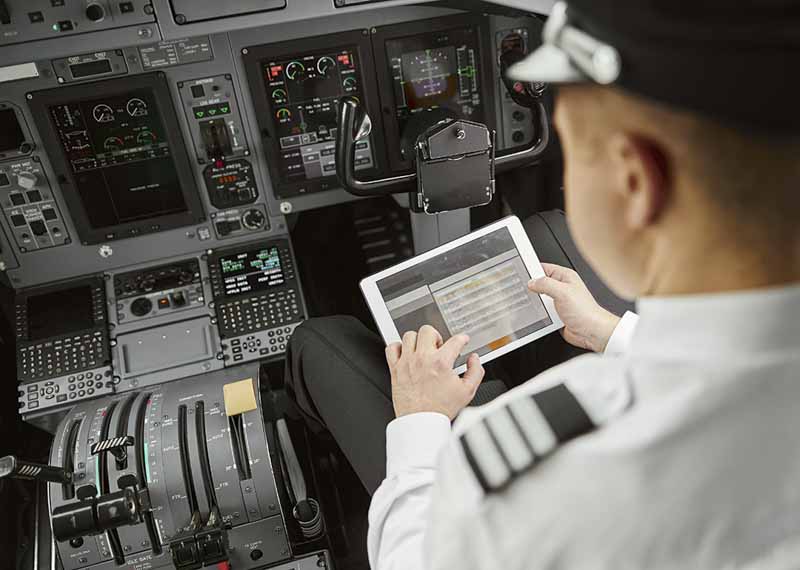
Technology alone does not guarantee safety in the air. Pilots must also interpret and act on increasingly rich data streams. While modern avionics reduces workload, it also introduces new human-machine interface challenges related to trust, automation reliance, and sensory overload.
Updated training modules should include turbulence radar interpretation, synthetic approach stabilization, TAWS alert prioritization and response, and automation management under stress. Instructors should also note that the biggest gains will come not from learning how to click a button, but from cognitive training that helps pilots assess what a system is showing and why.
Given that modern cockpits now include 3D synthetic terrain, turbulence projections, weather uplinks, and more, these layers risk overwhelming crews during abnormal events. Due to this, industry safety committees are likely to increasingly emphasize human factors in avionics certification.
A safer future through technology
While aircraft have never had more safety features, the climate and atmospheric environment they operate in is becoming more dynamic. Turbulence events, extreme heat, and convective weather hazards are increasing. The industry’s response has not been complacency, but rather innovation. From predictive radars to synthetic vision, terrain awareness systems to AI turbulence prediction, and weather uplinks to NextGen weather infrastructure, the aviation sector is investing in cutting-edge tools.
Every one of these technologies is individually powerful but transformative collectively. It’s clear that the future of aviation safety will be defined as much by data, sensors, and software as it will be by airframes and engines. As these systems continue to mature, passengers may not even notice the storms they never encountered, the diversions that never happened, or the turbulence they never felt, but those absences will be the true measure of success.