The cheapest private jet you can buy is a pre-owned King Air 100 turboprop, around $550,000. The cheapest way to fly private is to never buy one.
Both are true, and that contradiction is the whole problem. When you search for a "cheap private jet", you usually picture one of two situations, right? And the right move for one is a costly mistake in the other. Buy when you should charter, and you'll spend a million dollars a year keeping a jet warm for forty hours of flying. Charter a large cabin when a turboprop would do, and you'll pay for range and seats you never touch.
The cheapest jet to charter is rarely the cheapest jet to own. A handful of models are cheap on both counts, though, and that overlap is where the real value hides.
What's the Cheapest Private Jet?
The cheapest private jet depends on whether you charter or buy.
To charter, a turboprop like the King Air 100 starts around $2,300 per flight hour.
To own, the Vision Jet runs about $3.6 million new, while a pre-owned Beechjet 400 can sell for roughly $800,000, the lowest entry point for a real jet.
Two Ways to Read "Cheapest": Charter vs. Own
Buying and chartering aren't two versions of the same decision. A charter costs you nothing until you fly. Ownership costs you whether the wheels turn or not. One is a per-trip expense; the other is a standing one, closer in size to a second mortgage.
| Charter | Buy | |
|---|---|---|
Upfront cost | $0 | $550K to $7M+ |
What you pay | Per trip, by the hour | Purchase, then ~$1M+/year to run |
Best for | Under ~50 flight hours/year | 200+ flight hours/year |
Commitment | None | Multi-year |
Cheapest entry | ~$2,300/hour | ~$550K (pre-owned turboprop) |
For most people asking about cheap jets, the honest answer is a few trips a year, and at that frequency charter wins on cost every time.
Cheapest Private Jets to Charter by the Hour
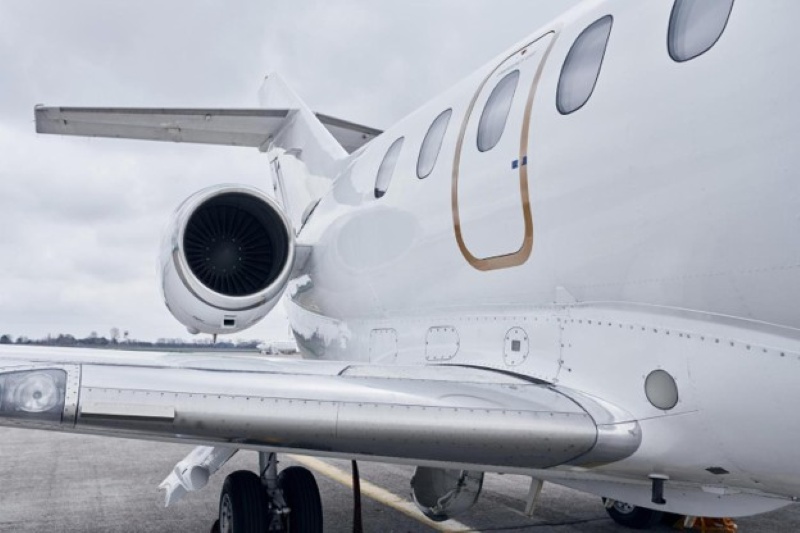
The cheapest private jet to charter is a turboprop, starting near $2,300 per flight hour for a King Air 100, with the King Air 250 close behind at $2,500. Very light and light jets come next, with the Eclipse 500 around $2,900 and the Citation Mustang near $3,200 per hour. Rates climb with cabin size, range, and aircraft age.
Charter pricing follows a simple rule. The smaller and older the aircraft, the lower the hourly rate. That's why turboprops and very light jets anchor the budget end of every fleet.
Turboprops: The Lowest-Cost Entry to Private Flight
A turboprop trades a little speed for a lot of savings. You won't cross the country nonstop, but for a 300-mile hop to a meeting or a weekend lake house, a King Air does the job for less than anything with a jet engine. Short runways don't faze it either, which opens up small regional airports a jet would skip.
| Aircraft | Category | Passengers | Paramount hourly rate |
|---|---|---|---|
Eclipse 500 | Very light | 4-5 | $2,900 |
Citation Mustang | Very light | 4 | $3,200 |
Vision Jet | Personal | 5 | $3,000 |
Beechjet 400 | Light | 7 | $3,750 |
Phenom 100 | Very light | 4 | $3,400 |
Very Light and Light Jets: The Cheapest Real Jets to Charter
For an actual jet, one that pressurizes and climbs over the weather, the very light and light categories are where the price finally comes down. You get a real cabin, cruise at 40,000 feet, and speeds that turn a long drive into a short flight. The Eclipse 500 sits at the bottom of the range, with the Citation Mustang and Beechjet 400 close behind.
| Aircraft | Category | Passengers | Paramount hourly rate |
|---|---|---|---|
Eclipse 500 | Very light | 4-5 | $2,900 |
Citation Mustang | Very light | 4 | $3,200 |
Vision Jet | Personal | 5 | $3,000 |
Beechjet 400 | Light | 7 | $3,750 |
Phenom 100 | Very light | 4 | $3,400 |
Why "Cheapest per Hour" Isn't Your Final Bill
A $2,300 hourly rate sounds like a $2,300 flight. It rarely is. Operators bill a daily minimum, usually two hours for light aircraft, so even a 40-minute hop gets charged as two. Then come the add-ons: a 7.5% federal excise tax on domestic flights, a $5.30 segment fee per passenger per leg, fuel surcharges running 10 to 15%, and positioning costs if the jet has to fly empty to reach you.
Picture a quick light-jet day trip:
- Two billable hours at $3,200 = $6,400
- Fuel surcharge (12%) = $768
- Federal excise tax (7.5%) = $480
- Segment fees (4 passengers, one leg) = $21.20
- Estimated total ≈ $7,670
That last number is the one that matters. A good advisor quotes it all upfront, so the figure you approve is the figure you pay. (For the full breakdown of every line item, see our pricing guide.)
The Genuinely Cheapest Way to Fly Private
The single biggest lever on private-flight cost isn't which jet you pick. It's how you book it. Six tactics consistently move the number, and most travelers use none of them.
- Fly an empty leg. When a jet drops off one client and needs to reposition for the next, it often flies empty. Operators sell those legs at 25 to 75% off. The catch is flexibility: you take the route and time the aircraft is already flying. Check live empty legs against your trip.
- Book a floating-fleet aircraft. Some jets aren't tied to a home base. If one's already near your departure city, you skip the repositioning fee entirely, which can cut up to 30% off a one-way.
- Right-size the jet. A large-cabin jet on a two-hour trip burns money on range you'll never use. Matching the aircraft to the actual mission is the easiest saving there is.
- Pick a secondary airport. Flying into Van Nuys instead of LAX, or White Plains instead of Teterboro, trims landing and ramp fees by $1,000 to $3,000, and often gets you closer to where you're going.
- Split the cost. Charter is priced per aircraft, not per seat. Fill six seats and the per-person cost can rival commercial business class.
- Book early. Lock in 14 or more days out and your advisor has time to put operators in competition for your trip, which drives the quote down.
Your Paramount advisor runs these checks before quoting, so the savings get applied without you hunting for them.
Cheapest Private Jets to Buy in 2026
The cheapest private jet to buy is a pre-owned turboprop or light jet. A King Air 100 turboprop sells for around $550,000, and a pre-owned Beechjet 400 for about $800,000. Among new jets, the Vision Jet is the most affordable at roughly $3.6 million.
Ownership prices swing wildly with age. A model that cost $4 million new can trade for under $1 million a decade later, once the steepest depreciation is already behind it. Each model's pre-owned price, new price, and charter rate come straight from Paramount's own aircraft listings.
| Aircraft | Category | Pre-owned | New | Charter/hr | Passengers |
|---|---|---|---|---|---|
King Air 100 | Turboprop | $550K | N/A | $2,300 | 6 |
Beechjet 400 | Light | $800K | N/A | $3,750 | 7 |
Eclipse 500 | Very light | $1.0M | N/A | $2,900 | 4-5 |
Vision Jet | Personal | $2.7M | $3.6M | $3,000 | 5 |
Citation Mustang | Very light | $2.1M | N/A | $3,200 | 4 |
Citation CJ1+ | Light | $2.2M | N/A | $3,750 | 7 |
Phenom 100 | Very light | $2.4M | N/A | $3,400 | 4 |
Citation M2 | Light | $4.4M | $5.3M | $3,400 | 6 |
Phenom 300 | Light | $7.0M | N/A | $4,600 | 8 |
Two aircraft anchor the low end, and they're not the same one. The King Air 100 is the cheapest aircraft in Paramount's entire fleet to buy outright, at $550,000. Restrict the field to real jets, and the Beechjet 400 takes over at $800,000 — cheaper to own than the Eclipse 500, though the Eclipse 500 still charters for less. Checked against all 120 aircraft in the current data, neither gets beaten on its respective claim.
Very Light Jets: The Cheapest New Jet You Can Buy
If you want a brand-new jet with a warranty and the latest avionics, the Vision Jet is the realistic floor at about $3.6 million. It's a single-engine personal jet built to be flown by its owner, which holds down both the purchase price and the running costs. Step up to a new Citation M2 and you're past $5 million, but you gain cabin space and a second engine.
Pre-Owned Light Jets: Where the Value Lives
The real bargains aren't new at all. A Beechjet 400 that's flown reliably for years can be had near $800,000 — the cheapest real jet on the market, at any age. A pre-owned Citation CJ1+ runs around $2.2 million. These aircraft already took their depreciation hit, yet many fly with refreshed interiors, updated avionics, and Wi-Fi. For a buyer who cares more about getting airborne than about the smell of a new cabin, pre-owned is the smarter spend.
Why Buying Is the Cheapest Part of Owning a Jet
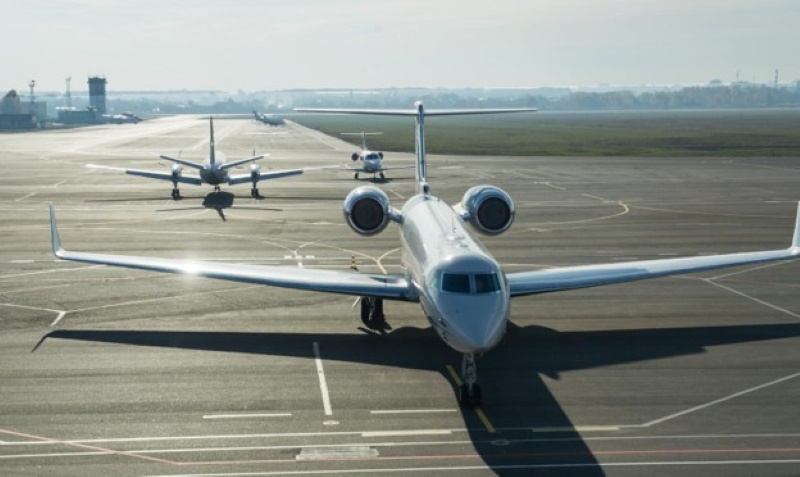
That $550,000 turboprop is the number everyone quotes. It's also the smallest check you'll ever write on it.
Run a jet, and you carry two kinds of cost. Fixed costs don't care whether you fly: crew salaries, insurance, hangar, training, scheduled refurbishment. Variable costs track your flying: fuel, engine maintenance, landing fees. Together, they push the annual budget for even an entry-level jet past $1 million, and the standing cost of a midsize jet can top $2 million a year.
One thing decides the math. Utilization. Fixed costs are spread across the hours you fly, so the math swings hard on how often you go up. Fly a midsize jet 200 hours a year, and the effective cost lands near $11,000 an hour. Fly it 400 hours, and the same jet drops to about $5,500. The more you fly, the cheaper each hour gets, which is why ownership only pencils out above roughly 200 hours a year.
Below that, you're paying a seven-figure annual bill to keep an asset that mostly sits.
Can You Buy a Private Jet for Under $500K?
You can buy an aircraft for under $500,000, but not a real jet — and it's close even for a turboprop. The cheapest options are vintage turboprops from the 1960s and 1970s, such as an older King Air 90, which can sell in the high $400,000s; a current King Air 100 lands just above that line at around $550,000. Pure jets start higher, with the cheapest — a pre-owned Beechjet 400 — beginning near $800,000.
The internet loves the story of a $50,000 private "jet." It's almost always a half-century-old turboprop or piston twin, and the headline conveniently drops the rest of the sentence. Older airframes mean older systems, harder-to-source parts, and maintenance bills that can dwarf the purchase price. They can suit a hands-on owner-pilot flying short hops. They are not a shortcut to jet travel. For most people, the honest floor for a flyable, well-supported jet is a pre-owned Beechjet 400 around $800,000.
Charter or Buy: Which Is Cheaper for You?
The whole decision comes down to one number: how many hours you fly a year.
- Under ~50 hours a year: Charter, no contest. The fixed costs of ownership never start, and you skip the asset entirely.
- 50 to 200 hours: The middle ground. A jet card or fractional share can beat both on-demand charter and full ownership, giving you fixed hourly rates without the asset on your books.
- 200+ hours a year: Ownership starts to make sense, because high utilization finally drags the per-hour cost down to where it competes.
If you can't peg that number, look at last year's actual trips before committing to anything. Most people overestimate how much they'll fly, and the cheapest jet is the one you don't have to own. to line up three models side by side if you're weighing the buy side.
Find Your Cheapest Private Jet
The cheapest private jet on paper and the cheapest way for you to fly are rarely the same aircraft. If you go up a few times a year, charter almost always wins, and the right tactics make it cheaper still.
Our cost estimator gives you an instant price on any route and aircraft, taxes and fees built in, no account needed, so you can compare options before committing to anything.
But if you want the lowest real number for a specific trip — talk to an advisor. We check live empty legs, floating-fleet positioning, and the right aircraft for your route, then bring you the lowest competitive quote. After 20 years and nearly 400 five-star reviews, every quote comes all-inclusive, with no markup on fuel surcharges and no surprises at the FBO.
Frequently Asked Questions
- Is the Vision Jet the cheapest jet?
The Vision Jet is the cheapest brand-new jet, at about $3.6 million, and around $2.7 million pre-owned. A pre-owned Beechjet 400 is cheaper still at roughly $800,000 — the cheapest real jet at any age — but the Vision Jet is the most affordable jet you can buy new.
- Is a turboprop cheaper to fly than a light jet?
Yes. A turboprop like the King Air 100 charters from about $2,300 per hour, while light jets start near $3,750. The turboprop gives up some speed and altitude for that lower rate, which makes it the better deal on trips under roughly 600 miles, where a jet never gets the chance to stretch its legs.
- What's the cheapest private jet for a family of six?
Most of the cheapest jets seat only four, which rules out the Eclipse 500, Citation Mustang, and Phenom 100 for a family of six. To charter, a King Air 100 turboprop seats six from around $2,300 per hour, the lowest option that fits everyone. For an actual jet, the Beechjet 400 holds seven, at about $3,750 per hour to charter or roughly $800,000 to buy used.
- What's the cheapest private jet that can fly coast to coast?
None of the cheapest jets can do it nonstop. Turboprops and very light jets run out of range around 1,000 to 1,200 miles. For a nonstop cross-country leg of about 2,140 nautical miles, the lowest-cost category that holds up is a super-midsize jet, starting near $6,200 per hour.
- Are cheap private jets safe?
A cheaper or older aircraft is as safe as a new one when it's maintained to FAA Part 135 standards and flown by a vetted operator. Paramount only books operators that meet ARGUS Gold or better, a standard that roughly 73% of charter operators don't meet. Before every departure, it runs a third-party safety check on the aircraft, crew, and operator.
Continuing Your Research:
You can get an online private jet flight estimate.
Learn more about what makes up the private jet rental costs.
Use our Private Jet Comparison tool to compare up to three aircraft side by side.
For more information or to speak with a live agent 24/7 call us at +1-877-727-2538 Ext. 1 or send us an email here.