

A close look at 2025 and 2026, though, reveals some encouraging steps in the right direction. From fuel supplier networks finally coming to the East Coast to major operations doubling down on verified emissions reductions, the infrastructure for greener private flying is taking shape. Paramount Business Jets has your guide to five key recent trends in sustainable travel.
SAF supply finally reaches the US East Coast
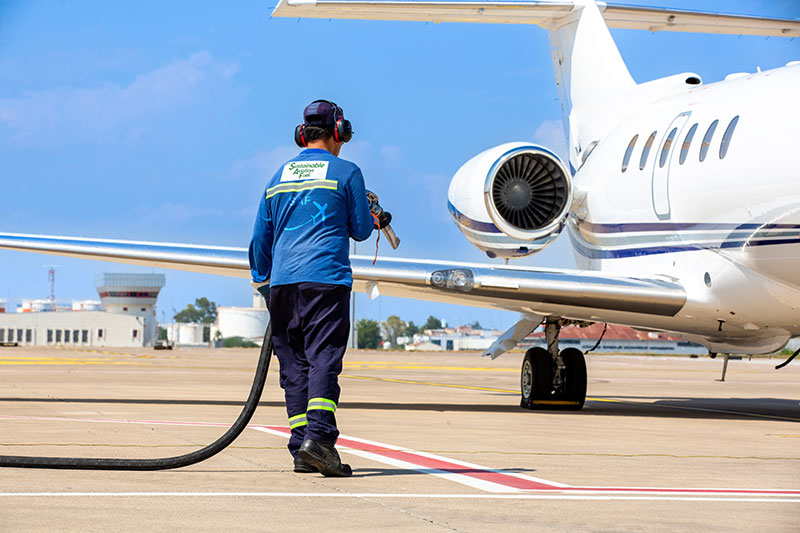
For years, sustainable aviation fuel (SAF) was largely a West Coast phenomenon. That changed in January 2025. New supply terminals opened in Linden, New Jersey, making it the first East Coast SAF point of its kind. This was joined shortly after by terminals at Port Everglades in Florida and Pasadena, Texas. These openings successfully established a continuous distribution network across the country for the first time.
The impact is significant. As outlined by the U.S Department of Energy, SAF is an alternative fuel made from nonpetroleum feedstocks in order to reduce air pollution during air transportation. This fuel can be blended at different levels with limits between 10% to 50%, depending upon the feedstock used and how it is produced. The opening of these new terminals contributes toward the goal of attempting to reduce lifecycle emissions by 50% by 2050.
US SAF production capacity more than doubles
The U.S. entered 2025 with a dramatically expanded domestic production base for SAF. Two large-scale facilities finally completed production in 2024 and, as of early 2025, U.S. Hydroprocessed Esters and Fatty Acids (HEFA) production across six plants totaled roughly 834 million gallons annually, based on analyst data.
Forecasts from the U.S. Energy Information Administration indicate that U.S. production of SAF-driving biofuels also more than doubled between 2024 and 2025, with an additional 20% increase projected through the end of this year. From a broader impact standpoint, the SAF Grand Challenge, a triple joint effort by the DOE, DOT, and USDA, targets 3 billion gallons per year of SAF production by 2030 and 35 billion gallons per year by 2050 to meet 100% of domestic demand. This near-term production capacity trajectory is finally moving in a direction which may meet this target.
Europe’s binding SAF mandate has begun to take effect
One of the most consequential regulatory developments in recent years came from Europe in 2025. The ReFuelEU Aviation regulation, part of the EU’s Fit for 55 climate package, officially took effect in January 2025. This mandate required aviation fuel suppliers to blend a minimum of 2% SAF at all major EU airports. The threshold rises to 6% in 2030 and 70% by 2050. The real-world impact of this mandate is an application on airports that see more than 800,000 passengers or 100,000 tonnes of freight annually, covering 95% of EU air transport departures.
To help enforce the mandate, noncompliance penalties are set at a minimum of twice the price difference between SAF and conventional fuel, multiplied by the volume shortfall. Switzerland adopted the same regulation at the start of 2026 which further expands its reach. Additionally, the U.K. has its own parallel mandate that required 2% blending in 2025, rising to 10% by 2030. According to the European Union Aviation Safety Agency, this regulation can potentially reduce the aviation sector’s CO2 emissions 60% by 2050.
Charter operations are raising the bar on verified carbon offsets
There’s been a trend of carbon offset programs facing skepticism in recent years. Industry standards are starting to finally shift, though. It appears that a growing number of private jet brokers and operators are moving from one-time announcements to verified offset commitments. For example, Flexjet partners with 4AIR (the rating system built specifically for private aviation sustainability) to offset emissions on every flight at no extra cost to customers. Netjets reports its annual SAF purchasing publicly (19.4 million gallons in 2024) and is pursuing audited reductions through its Blue Skies program. Further to this, these commitments will be audited through programs like the National Business Aviation Association’s Sustainable Flight Department Program.
This matters because verified initiatives that are audited by recognized authorities will set a higher bar than self-reported commitments. Operators achieving accreditation and then proving it through continued annual audits will show dedication to the overall mission, rather than the occasional unproven marketing announcement.
The future of private sustainable travel
The truth of private sustainable aviation is that all of the pieces are still in flight. Even if the overall share of SAF in the industry remains small, the above trends show movement in the right direction. Global production hit roughly 1.9 million tonnes in 2025 according to the International Air Transport Association, about double 2024, with 2.4 million tonnes projected for 2026.The supply infrastructure is finally starting to expand and major operators are spending large dollars to meet regulatory pressure. For travelers who care about the environmental footprint of their flights, this news should be a breath of fresh air.