

Private Jet Charter Myths, Sorted: What's False, What's Partly True, and What's True
Flying private is safer than the airlines. Buying a jet is always the wrong move.
We said both of those ourselves, in print, until we went and checked.
Ask around this industry, and the misconceptions that get corrected are the flattering ones, the myths that resolve into a reason to book. The awkward ones stay in circulation, and they're where a first-time charterer gets caught out.
Private Jet Charter Myths That Are Flatly Wrong
These three come up in almost every first call we take.
Myth: You Need to Be a Millionaire to Charter a Private Jet
Ask what a charter costs and you'll get a question back, because the answer depends less on your bank balance than on the shape of the trip.
Four people on a short regional hop in a light jet, splitting one invoice, land in a different financial universe from one person crossing an ocean in a large-cabin jet. A round trip where the aircraft waits for you tends to price better per hour than a one-way that leaves an operator flying home empty. Passenger count, distance, and whether the jet has somewhere to be afterwards move the number more than anything about you.
So the useful question is a narrow one: whether this route, on these dates, with these people, comes in somewhere you'd accept.
Price the route before you rule it out. Our charter cost estimator gives you a starting range, and our pricing guide explains what moves it.

Myth: Booking a Private Jet Is Complicated
There's a real version of this worry and a fake one. The fake one is that you need to tell a Citation XLS from a Phenom 300. Nobody expects you to.
The real one is that a quote is only as good as the questions behind it. Passenger and luggage count. Whether the aircraft waits or repositions. What the runway at each end can take. Visas, pets, unaccompanied minors. Miss any of those and the number you're handed is fiction.
The burden sits with the broker, and you can test whether they're carrying it. Three questions they should be asking you:
Is your schedule fixed, or can it move by a few hours?
Is there a moment on this trip you can't be late for?
Are you flying this route again this year?
A broker skipping all three is quoting on guesswork. Our FAQ covers the mechanics, and the first-time flyer's guide walks the sequence from inquiry to wheels up.
Myth: Private Jets Are Slower Than Commercial Airlines
Smaller aircraft, slower trip. It sounds reasonable, and it's the wrong axis. A midsize business jet crosses the country in roughly the time a narrowbody airliner takes. What changes is everything either side of the cruise: no connection, no queue, and an airport nearer to wherever you're headed.
The airport comparison gets stretched, and we've stretched it. You'll see 10,000 or more quoted for private airfields in the US. The number that matters is roughly 5,000 public-use airports against about 510 primary commercial service airports; the other 14,000 are private-use fields needing the owner's permission, and most can't take a jet. Still around ten times the choice an airline passenger has.
Where does the time go? Boarding takes minutes, there's no connection to miss, and landing 20 minutes from your meeting rather than 90 is worth more than any difference in cruise speed. Our first class versus private charter comparison runs the two side by side.
Private Jet Myths That Are Only Partly True
These four are right often enough to sound safe, which is how the exceptions catch people out.
Partly True: You Skip Security When You Fly Private
Park, walk to the aircraft, show ID, board. That's a typical private terminal, and it's why this one persists.
Three situations change it, and one applies to aircraft that plenty of our clients charter.
| Situation | What changes |
|---|---|
VIP airliners and other aircraft over 100,309 lbs MTOW, or configured with 61+ seats | The operator runs under TSA's Private Charter Standard Security Program. Passengers and accessible baggage are screened before boarding. |
Flights into Reagan National (DCA) | The DCA Access Standard Security Program applies: advance passenger vetting, an armed security officer on board, and departure from an approved gateway airport. |
International arrivals and departures | Customs and immigration apply as they would to any flight. Passports, advance passenger information, and a designated port of entry. |
REAL ID belongs here too. Since May 7, 2025, Part 135 charter passengers flying inside the United States have needed compliant identification, and an old driver's license won't clear you on its own.
None of this turns charter into an airline experience. It does mean knowing which category your flight sits in before you turn up expecting wheels up in 10 minutes. Chartering a VIP airliner? Screening comes with it.

Partly True: Bad Weather Doesn't Stop a Private Jet
A light jet has lower crosswind limits than an A320. A small regional field might run one de-icing truck, or none, and offer fewer instrument approaches when the ceiling drops. Nothing about a smaller aircraft makes weather easier, and anyone implying otherwise is selling.
What charter gives you is a way around the problem rather than through it. A front over your departure airport becomes a reason to leave from a field 40 miles away. When a morning slot looks marginal you go at two in the afternoon, and nothing collapses behind you, because there's no connecting itinerary to protect. That call is yours to make, which it never is on a scheduled ticket.
Partly True: Private Jets Can Fly Anywhere, Anytime
Range is rarely what stops a flight. Five other things do, and each gets checked before you're quoted:
Runway length and surface. A heavy jet needs far more concrete than a turboprop, and elevation and heat both shorten what a runway effectively delivers.
Prior permission. Plenty of airports require PPR before you file, and some grant it grudgingly to traffic that isn't based there.
Curfews and slots. Night restrictions get enforced. At slot-controlled airports, availability sets your departure time, not willingness.
Customs. International arrivals need an airport cleared to receive them, or officers arranged in advance to meet the aircraft elsewhere.
Fuel and ground handling. A field with a runway but no fuel after 5 p.m. and no crew on a Sunday is a field you aren't using.
A flight can be perfectly legal and still impossible on the day. Our airport directory lists what each field can take.

Partly True: Empty Leg Flights Are the Cheap Way to Fly Private
An empty leg is somebody else's trip in reverse. A client books a one-way, the aircraft has to get home, and the operator sells that repositioning at a discount rather than fly it empty. The savings are genuine.
What the operator can't sell you is certainty. Their obligation runs to the original client, so if that client shifts dates, your flight goes with it. Confirmation often arrives close to departure, terms are commonly non-refundable, and the route and window were never yours to set.
They work for:
Leisure trips where the destination is negotiable
Travelers who can decide inside an hour
Anyone treating the flight as a bonus rather than the plan
They don't work for:
Anything with a hard arrival time
Trips where a cancellation costs more than the saving
Travelers who need the return booked at the same time
Keep a commercial backup alive until the empty leg is airborne. Current availability sits on our empty leg flights page.
Criticisms of Private Jet Charter That Hold Up
Not every criticism of private aviation is wrong, and one persistent misconception belongs to the industry rather than to its critics.
True: Charter Isn't Automatically Safer Than Flying Commercial
Are private jets safer than commercial airlines? Not as a category. The NTSB's 2024 review of Part 135 operations found charter accident rates have historically stayed higher than Part 121 airline rates. Safety belongs to the operator you fly with, so the question worth asking is which operator, not whether it's private.
We made the opposite claim for six years, and correcting it costs us less than leaving it up.
The airlines have a record that's hard to argue with, and the aggregate charter figure wouldn't tell you much even if it read better. Part 135 covers air tours, air ambulance work, commuter services, and corporate jets under one rule set. Averaging a sightseeing helicopter with a Gulfstream operator says nothing about the crew flying you Thursday.
Which is where vetting earns its keep. ARGUS Gold is our minimum benchmark for every operator, no exceptions. Before each departure we run an ARGUS TripCHEQ and/or Wyvern PASS report on the crew, aircraft, and operator flying you, overseen by our in-house Safety Manager. You get a copy.
The regulatory floor is rising as well. In April 2024 the FAA finalized a rule extending Safety Management System requirements to all Part 135 operators, which means every legitimate operator is now building the documented risk process the airlines have run since 2018.
Audits don't reach everywhere: what private jet safety standards cover explains the gaps, including turboprops and regions with no audit coverage. Our full safety process sits separately.
True: Buying a Jet Can Beat Chartering It
The One Big Beautiful Bill Act, signed July 4, 2025, permanently restored 100% bonus depreciation for qualifying new and pre-owned aircraft acquired and placed in service on or after January 20, 2025, with IRS interim guidance following in Notice 2026-11. If you have qualifying business use and income to shelter, the first-year math looks nothing like it did.
Three questions settle it:
How many hours a year, and how repeatable are they? Ownership rewards high, predictable flying. Charter rewards variable demand and mixed missions.
Can you use the deduction? Bonus depreciation is worth nothing without taxable income and qualifying business use to apply it against.
Do you need the same aircraft every time? Owners fly what they bought. Charter clients take a light jet on Tuesday and a large-cabin on Friday.
Below the crossover, chartering wins on cost and always on flexibility. Above it, ownership starts to make sense, and your tax position can shift the line. Speak to an aviation tax advisor first. If your flying sits near the boundary, a jet card often fits better than either.
True: Private Flying Emits More Per Passenger
This one is true, and the industry does itself no favors by disputing it.
Research in Communications Earth & Environment, November 2024, put private aviation's direct emissions at roughly 15.6 million metric tons of CO2 in 2023, up about 46% from 2019, across around 256,000 people. Divide one by the other and you have the criticism.
Our old answer leaned on carbon offsets and a celebrity example. Neither was worth much. Offsets fund a project somewhere else; they don't unburn the fuel, and presenting them as neutrality reads as evasion. What moves the underlying figure:
Right-sizing the aircraft instead of booking the largest available
Avoiding itineraries that leave an aircraft repositioning empty in both directions
Sustainable aviation fuel via book-and-claim, where the fuel enters the supply chain even if not your tank
Our carbon calculator measures a flight's footprint, which is where it earns its place. Where decarbonization stands covers the industry's progress and its gaps.
The Charter Misconception That Costs People Money
The myth here sounds like this: if you paid for it, it must be a legal charter.
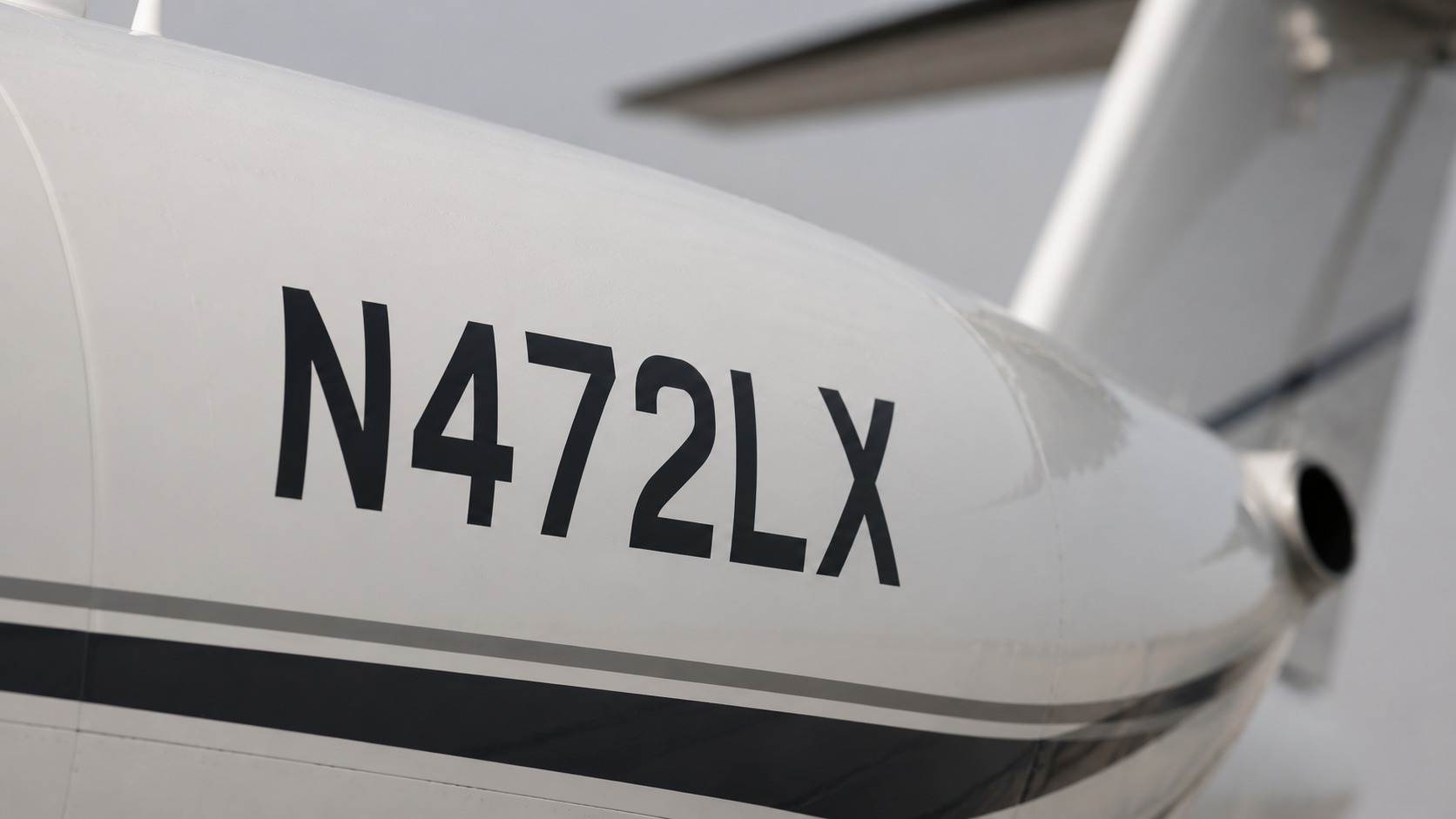
You pay an invoice, a crewed jet turns up, and the day looks like a charter. None of that makes the flight one.
Part 91 flying is private and non-commercial. Selling transportation to the public requires Part 135, which brings tighter rules on crew training, duty and rest limits, maintenance, and operational control. Grey charter is a flight belonging under Part 135 dressed up as something else. The discount comes out of the compliance budget, and the compliance budget is the safety margin. Insurance may decline to respond if the flight goes wrong.
Checking takes about five minutes:
Ask for the operating company's legal name and air carrier certificate number. Not the broker's details. The operator's.
Check both against the FAA's published list of certificated Part 135 operators and the aircraft each one is authorized to fly, searchable by operator name or tail number.
Treat reluctance as your answer. A legitimate operator hands this over without hesitation. The Air Charter Safety Foundation runs the FAA's illegal charter hotline if something looks wrong.
Paramount Business Jets acts as your agent. Every flight we arrange is operated by an FAA Part 135-certified provider, or the equivalent foreign authority. Our accreditations list who audits us.
FAQ
Do Private Jet Passengers Show ID?
Yes, every passenger. Domestic US charter has fallen under REAL ID rules since May 7, 2025, so bring a compliant license or a passport. International trips require passports and any applicable visas, submitted ahead of departure for customs filing.
What's the Difference Between a Charter Broker and a Charter Operator?
The operator holds the air carrier certificate and puts the crew and aircraft on the line. A broker works for you instead, vetting operators across the market rather than selling you one fleet. Paramount Business Jets is a broker; we don't own or operate aircraft.
Can You Charter a One-Way Flight Without Paying for the Return?
Yes, though the price reflects where the aircraft ends up. If it has to fly home empty, that repositioning shows up in your quote. One-ways closest to round-trip pricing are the ones where an operator already needed the aircraft near your destination.
How Far Ahead Should You Book a Private Jet?
Four hours is achievable on many domestic routes when aircraft are positioned nearby. A few days buys better choice and better pricing. Peak dates, international itineraries, and large groups deserve weeks.